Growing up in Alaska and living in Hawaii, Dr. Janik is a natural naturalist, not only by location but by interest. For 12 years, he hiked, skiied, camped, fished, prospected, and photographed Southcentral Alaska from Valdez to Denali. He currently lives in the Hawaiian Island Archipelago in Honolulu, Hawaii.
A former member of the National Association for Interpretation and California Native Plant Society, he participated in BayIt's [San Francisco] Bay Area Interpretive Training Program, and led private tours in the Bay Area interpreting the local natural environment and Ohlone Indian culture. His archeological and naturalist interests have taken him numerous times to ancient Greece, Rome, Pacific and Southern American Indian as well as Polynesian cultural sites.
After finishing advanced training in environmental epidemiology at the University of Utah's Rocky Mountain Center for Occupational and Environmental Health, he did a NASA-ASEE Summer Faculty Fellowship assisting in the determining water quality requirements for recycled water. Immediately after, he did two post-doctoral senior research associateships with the National Research Council (U. S. National Academy of Science) in space life sciences, one at NASA-Johnson Space Center addressing potable water quality requirements for the US Space Shuttle and International Space Station, and one at NASA-Ames Research Center addressing biologically reclaiming/recycling water for long duration space missions. In 1993, he established a private research effort exploring a sustainable methods of potable water production including new "natural" beverages, and the discovery and identification of new phytopharmacologics including preferential new and established flavors and scents.
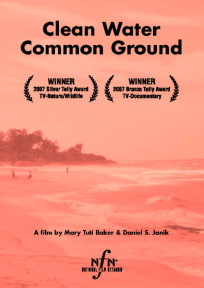
In 1993, after retiring from private medical practice, he moved to Hawaii to serve as a USDA Cooperative Extension Service Water Quality Agent for Northshore Oahu, and the Community Environmental Educator for the Kaiaka-Waialua Hydrologic Unit Area Project. He established Hawaii's CAP (Classroom Augmentation Project) and PEP (Public Education Project) addressing clean water, and native plant and culture restoration. In the process, he served as Executive Producer for the two-Telly-award-winning made-for-television documentary "Clean Water, Common Ground" summarizing the project. In 1996, he received a Certificate of Appreciation from Honolulu Mayor Jeremy Harris for his services in protecting Hawaii's environment.
"Mokuleia presents
an ideal model - a general microcosm - for studying the effects that
people have on water quality in all countries, including mainland USA,
especially in terms of land management and water quality control." - Wild Film News
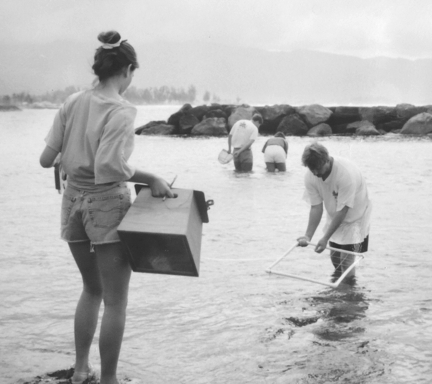
National Film Network, 1999
29 Min. Color. Full Screen.
Includes Participant Studio Discussion
ISBN 978-0-8026070-4-1
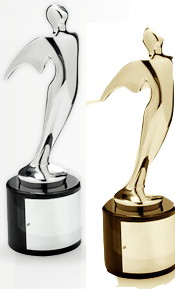
2007 Telly Award Winner for
* Silver Award for Best TV Nature Wildlife Film
* Bronze Award for Best TV Documentary
We must recognize the dramatic role water has in shaping our environment, and how it affects different species of animals and fish in the ocean. If we address the chief threats to our environment and determine the measures needed to tackle those threats head-on, we may be able to preserve both water and land for many generations to come. But we must act now!
DVD also includes a studio discussion, highlighting the key issues posed in the film.
Directed by Mary Tuti Baker
Wondering what I'm up to these days? Check out my BLOG!
Translate This Page